
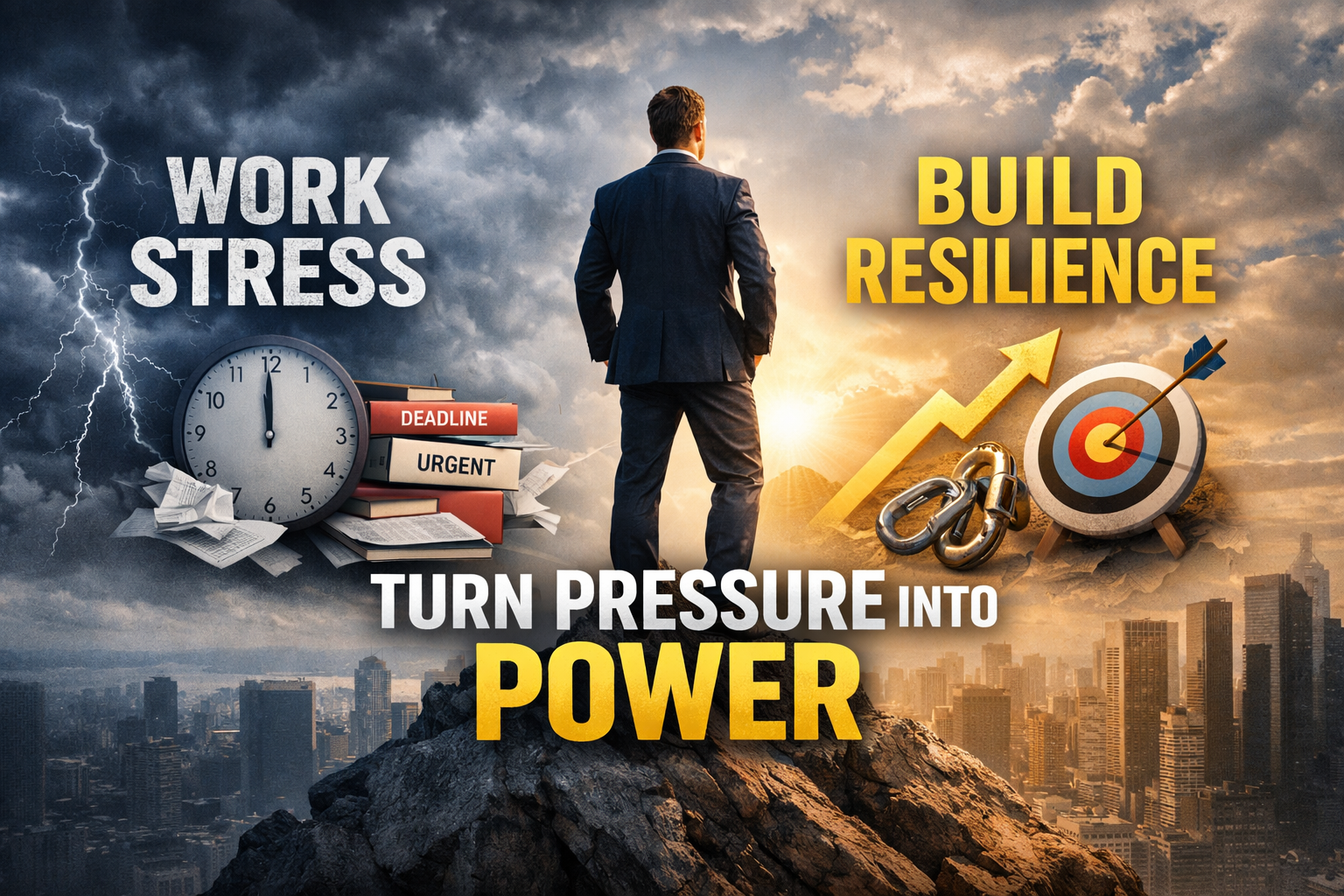
Work stress will happen. It is inevitable.
How you navigate that stress will either propel your leadership forward or quietly limit your trajectory.
Developing emotional resilience is essential for leaders who want to grow in their careers and expand their influence. Running a team and leading projects means facing uncertainty, missed expectations, shifting priorities, and unexpected obstacles. Things will not always go as planned. The difference-maker is not whether problems arise — it’s how prepared you are to face them before they occur.
How you respond to challenges shapes how others see your leadership potential. Senior leaders consistently observe how emerging leaders handle pressure. Decisions about promotion and advancement are often influenced by how you show up during difficult moments.
Emotional Resilience: The Leadership Multiplier
Emotional resilience is your ability to navigate challenges without becoming overwhelmed, defensive, or avoidant.
If you want to be extraordinary, you must be extraordinary not only in stable conditions but especially during extraordinary difficulty.
Leaders who are risk-averse when it comes to challenges often “play it safe.” They recognize early signs that something will be difficult and begin distancing themselves from it. They may delay decisions, redirect responsibility, or quietly push the issue off their plate.
At DMC, we see this pattern often when working with organizations and their teams. When faced with an unfamiliar or complex situation, some employees immediately generate reasons why something cannot be done. We call this a defense mechanism — a protective strategy to avoid discomfort.
These leaders magnify constraints rather than explore possibilities. Their objections are often rooted more in personal perspective than in data or stakeholder feedback. When we ask questions such as:
How do you know that’s the case?
What data led you to that conclusion?
Have you validated this with those impacted?
We sometimes discover that the resistance is not evidence-based. It is discomfort-based.
At that point, defensiveness may surface. And if their leader is present, they may already recognize this pattern. Over time, responsibility gets shifted elsewhere — to someone perceived as more willing, more solution-oriented, or more resilient.
When this happens, leaders notice. They register the limitations. And when critical, high-visibility projects arise, they often bypass the individual who demonstrated avoidance or lack of ownership.
The long-term consequence? Missed opportunities. Reduced advancement. A reputation shaped by reaction rather than resilience.
Building Emotional Resilience Intentionally
Emotional resilience does not develop accidentally. It must be practiced.
One of the most effective ways to build it is by challenging yourself outside of work in ways that stretch your comfort zone. The goal is to normalize productive discomfort.
Examples include:
Exercising consistently even when you don’t feel like it
Improving eating habits
Learning something completely new from scratch
Taking public speaking classes if speaking makes you uncomfortable
Learning a new language and practicing with strangers
Waking up earlier than your norm to build discipline
Any habit that disrupts your comfort patterns strengthens your internal capacity.
If you are not intentionally stretching yourself in some area of your life, work challenges will feel heavier. But if you are already practicing discipline, vulnerability, and growth in other areas, you can transfer those skills into your professional environment.
Resilience compounds.
The Mindset Shift
A critical starting point is mindset.
Instead of viewing a difficult task as “extra work” or an inconvenience, reframe it as an opportunity to contribute and grow. As long as you view something negatively, you will resist it. And resistance prevents growth.
Growth requires reframing.
Ask yourself:
What skill is this situation helping me develop?
How can this strengthen my leadership capacity?
What would an emotionally resilient leader do here?
Actionable Habit Building
Resilience is built through consistent practice. Identify specific habits that support the area where you struggle.
If you avoid conflict, practice initiating small, constructive conversations.
If ambiguity stresses you, intentionally take on projects with unclear outcomes.
If visibility makes you uncomfortable, volunteer for presentations.
Consistency matters. Integrating these practices into your schedule is the only way habits form.
Grounding and Self-Regulation
Resilience also requires the ability to regulate yourself in the moment.
Ask:
What do I need to say to myself right now?
How can I ground myself before responding?
What response aligns with the leader I want to become?
Learning to pause, reframe, and respond — rather than react — is a hallmark of emotionally resilient leadership.
Resilience Is a Transferable Leadership Asset
Emotional resilience must be developed early and practiced consistently. The leaders who embrace challenges — rather than avoid them — are the ones senior executives trust with greater responsibility. They are also the ones organizations retain during difficult times.
But perhaps most importantly, resilience is not just for your employer.
It is a transferable skill that strengthens your personal life, relationships, and overall well-being. It builds confidence. It deepens self-trust. It enhances your ability to navigate life’s uncertainties with steadiness.
Work stress is inevitable.
Growth is optional.
Choose to build the capacity that allows you to rise — not retreat — when pressure comes.
The DMC Workforce Success Team has more than 20 years combined experience and provides sustainable solutions to the complex social issues that affect large, medium or small businesses. Building authentic relationships is at the heart of DMC’s work, developing trust and honesty with employees to get to the root of issues and include them in the design of solutions.